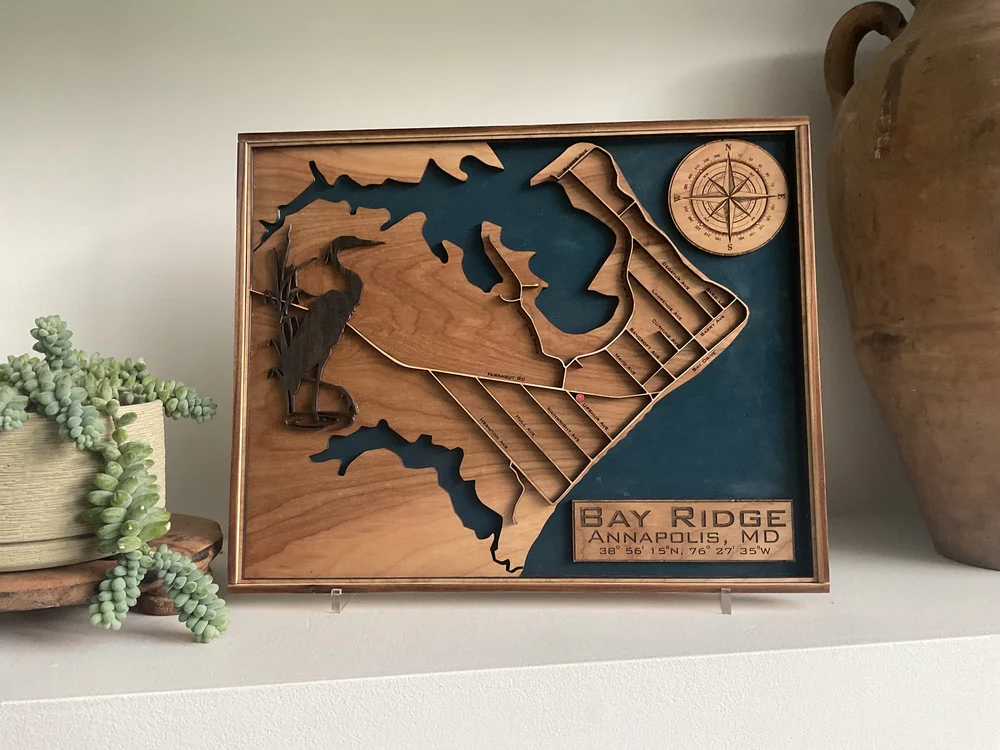
What started as a personal project to learn the laser cutter at my local makerspace quickly turned into a small-scale production run. By combining GIS data, vector design, and batch manufacturing techniques, I built a multi-layered wooden topographical map of my neighborhood that eventually scaled into fulfilling 43 custom orders.
Lean DFM and Process Optimization
Scaling from a single prototype to a 43-unit run meant I had to completely rethink how these maps were made. The first version simply took too long to cut, wasted a lot of wood, and was incredibly tedious to assemble.
- Running separate cut files for every single physical layer
- Stopping to manually recalibrate the laser focus between cuts
- Poor part layout leading to wasted material and long laser travel times
- ~12 hours of total end-to-end build time per map
- Combined all layers and frame components into just two nested cut files
- Tightly nested parts to maximize the wood sheet and reduce laser travel
- Switched to batch processes for staining, clamping, and gluing
- Cut laser time by over 50% and dropped total build time to ~3 hours
GIS Data & Vector Design
Turning raw geographic data into a clean, cuttable design required a structured vector workflow:
- Data Extraction: I pulled the raw road networks and land boundaries using the Google Maps API and SnazzyMaps to isolate high-contrast vector lines.
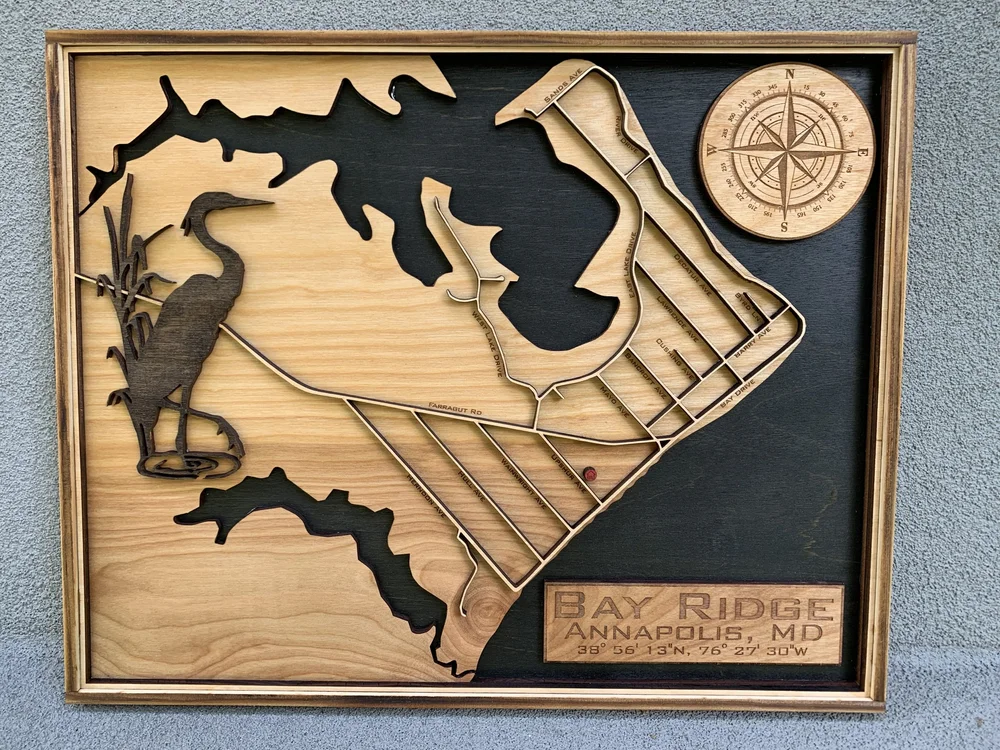
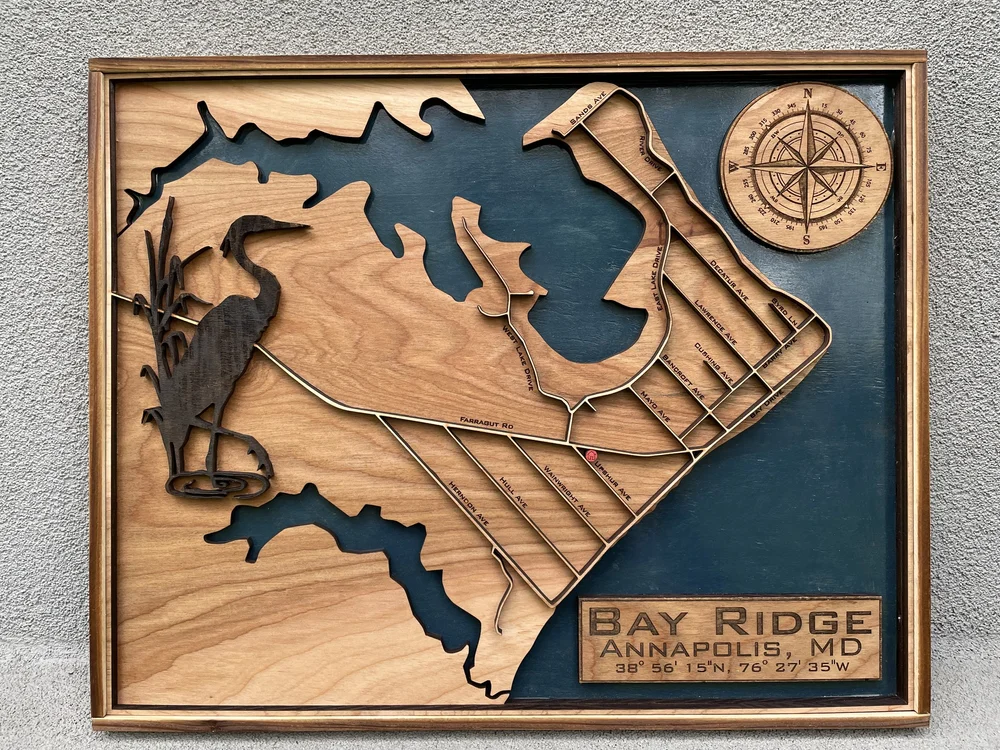
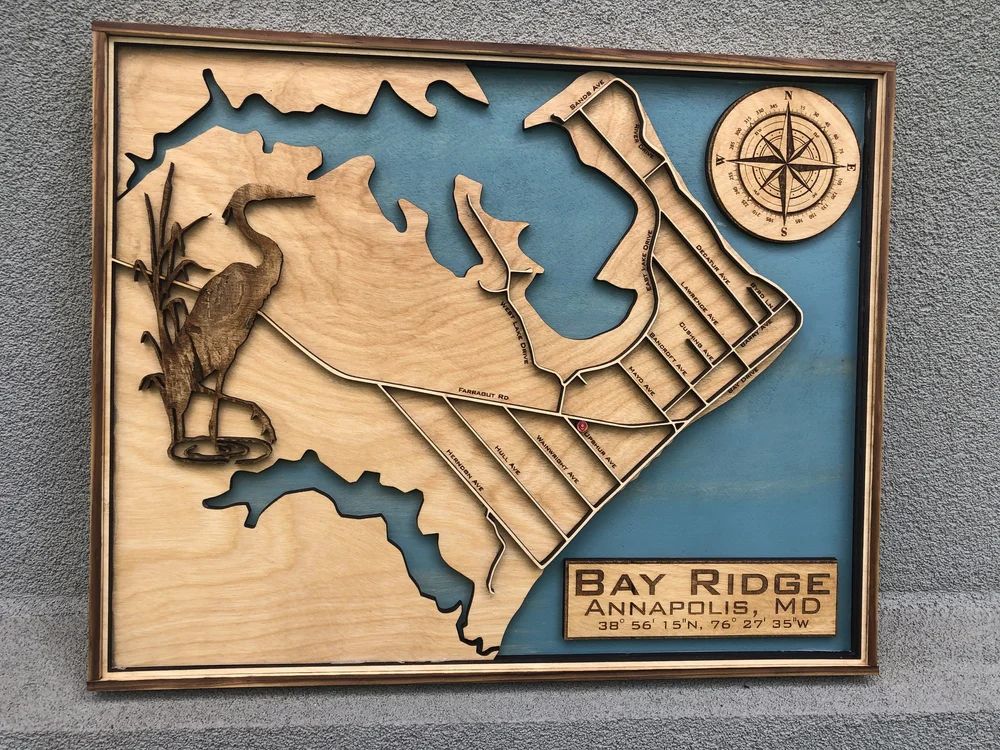
- Vector Optimization: Using Inkscape, I separated the map into three physical layers: the water basin, the base land terrain, and the top road grid. I cleaned up the vector nodes to remove stray paths, account for the laser kerf, and ensure the delicate road networks remained structurally intact.
- Custom Coordinate Pin: To personalize each map, I added a custom marker pin placed at the client’s exact latitude and longitude.
Color Variants
To offer a few different styles without slowing down batch production, I offered three standard stain colors for the map’s background water layer.
Production Results
Over the course of a 8 months, I managed the entire process from buying the raw wood and running the laser cutter to final assembly and shipping.
Key takeaways from the production run include:
- CNC Laser Operations: Dialed in the laser power, speed, frequency, and focal distance settings across various wood thicknesses to get perfectly clean, repeatable cuts.
- Assembly Jigs: Built standard jigs for clamping, gluing, and finishing that cut the manual assembly time per unit by 75%.
- Final Delivery: Manufactured and delivered 43 custom maps, successfully turning a hobbyist makerspace project into a reliable small-scale production run.